

How to Install Aluminum Facade Panels: The Complete Guide to Sub-structure Systems | M-City
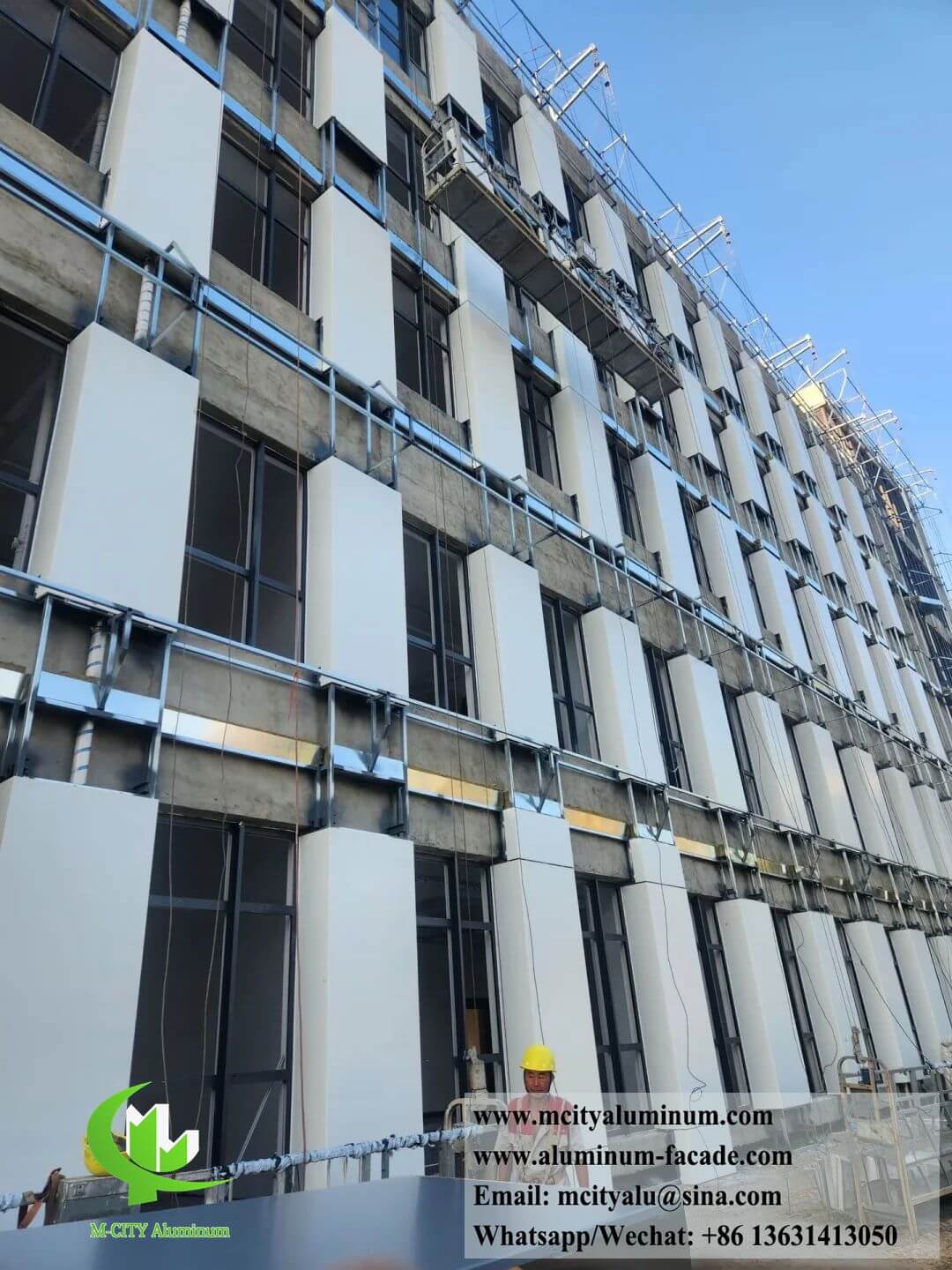
The Backbone of Beauty: A Professional Guide to Aluminum Facade Installation
When it comes to high-end architectural cladding, the final aesthetic is only as good as the structure hidden behind it. At M-City Aluminum, we believe that transparency in the installation process is the best way to demonstrate quality.
With 20 years of experience in manufacturing double-curved, 3D, and perforated panels, we are sharing a look at the essential steps of a professional aluminum facade installation.
1. Setting the Foundation: The Sub-structure (Skeleton)
As seen in our recent project photos, the first and most critical phase is the installation of the aluminum or galvanized steel sub-structure.
Precision Leveling: Vertical and horizontal rails (mullions and transoms) must be perfectly aligned using laser levels to ensure the facade is flat and uniform.
Structural Support: This "skeleton" is designed to handle wind loads and the weight of the panels. For custom 3D or deeply recessed panels (like 400mm depth designs), the sub-structure requires reinforced brackets to maintain stability.
2. Attachment and Mounting Points
The panels are not just "glued" on; they are engineered to be part of the building.
Mounting Brackets: High-strength clips are attached to the rails.
Thermal Expansion: Professional installation accounts for the expansion and contraction of aluminum due to temperature changes, preventing the panels from warping or "oil canning" over time.
3. Panel Mounting: Achieving the Seamless Look
Once the skeleton is secured, the custom aluminum facade panels are mounted.
Integrated Design: Our panels often feature pre-engineered mounting points to speed up on-site labor and ensure a perfect fit.
Interlocking Systems: For 3D geometric shapes, we use specialized interlocking joints that hide the fasteners, providing a clean, screw-less appearance from the outside.
4. Why the Internal Structure Matters
Many clients only focus on the exterior finish, but the internal framework determines the longevity of the project. A well-installed sub-structure prevents:
Water leakage and moisture buildup.
Vibrations or noise during high winds.
Structural fatigue in custom-shaped or heavy 3D panels.
Conclusion: 20 Years of Engineering Excellence
From the initial 3D design to the final panel clip, M-City Aluminum provides comprehensive technical support. Whether you are installing standard wall cladding, complex double-curved surfaces, or decorative perforated screens, our team ensures that the "bones" of your building are as strong as the facade is beautiful.
Looking for a technical consultation or a detailed installation drawing for your next project? Contact us at [email protected]—our factory officially resumes operations next Wednesday, and our engineers are ready to assist.